
Termite vs flying ant can easily be mistaken for one another. But identifying these pests is crucial for home protection. Discover the key differences today!
Physical Characteristics of Termites
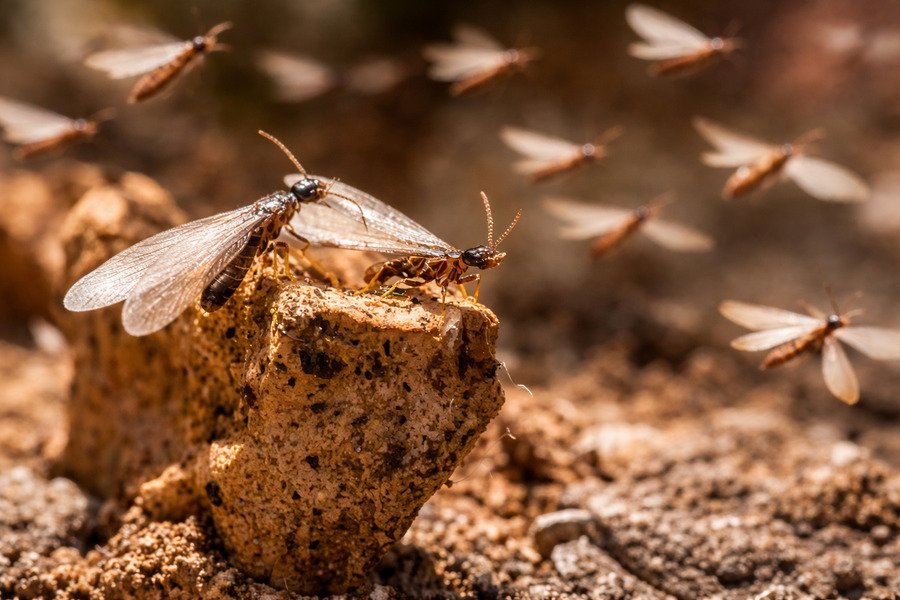
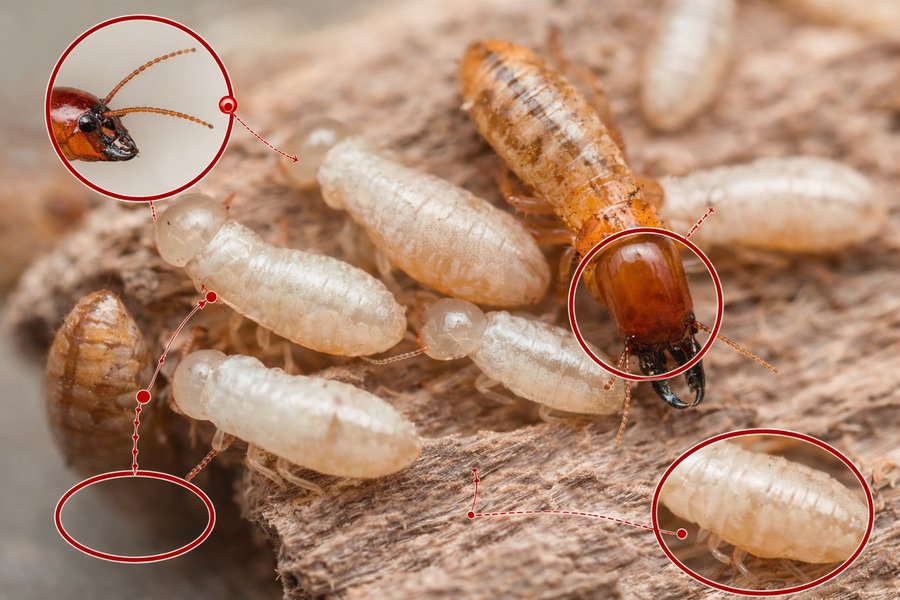
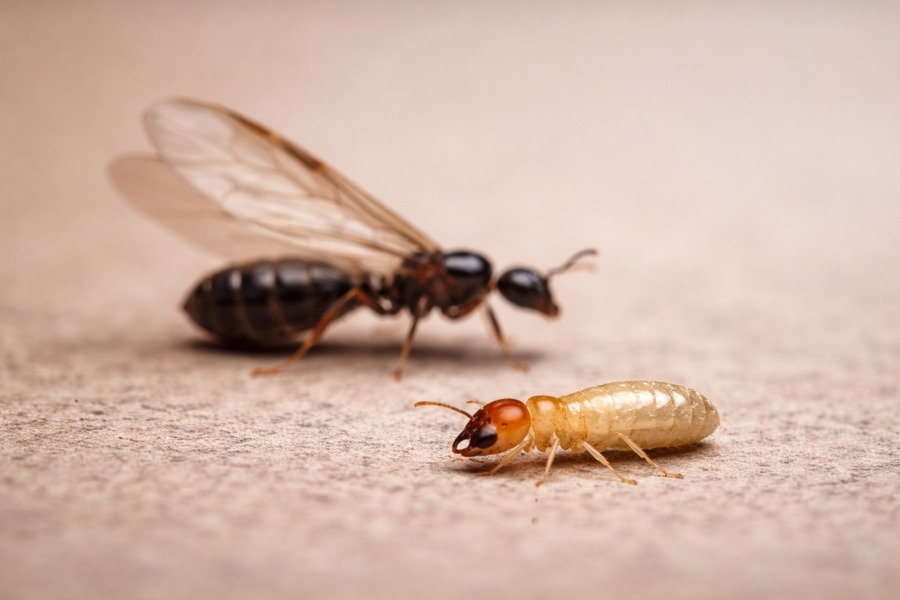
Termites are small, soft-bodied insects with a pale and somewhat translucent appearance. They usually range in color from white to light brown. One of the most distinguishing features of termites is their straight, bead-like antennae. Unlike ants, whose antennae are bent, termites have straight antennae that are uniformly segmented, giving them a unique look. Additionally, termites have a broad waist, meaning there is no constriction between their thorax and abdomen. This gives their body a more tube-like, uniform shape.
The wings of a termite are another crucial characteristic that helps in identifying them. Termites have two pairs of wings that are equal in size and shape. These wings are often twice the length of their body, and when at rest, the wings lie flat over their back. This is in contrast to flying ants, whose wings are of different sizes. Moreover, termite wings are fragile and can easily fall off, which is often why you might find discarded wings near windowsills or other entry points in your home.
Termites also have strong, dark-colored mandibles (mouthparts) that they use to chew through wood and other cellulose materials. These mandibles are quite powerful relative to the termite’s size and are essential for their role in breaking down wood. The combination of their straight antennae, broad waist, and equal-sized wings helps to distinguish termites from other insects, including flying ants.
Physical Characteristics of Flying Ants
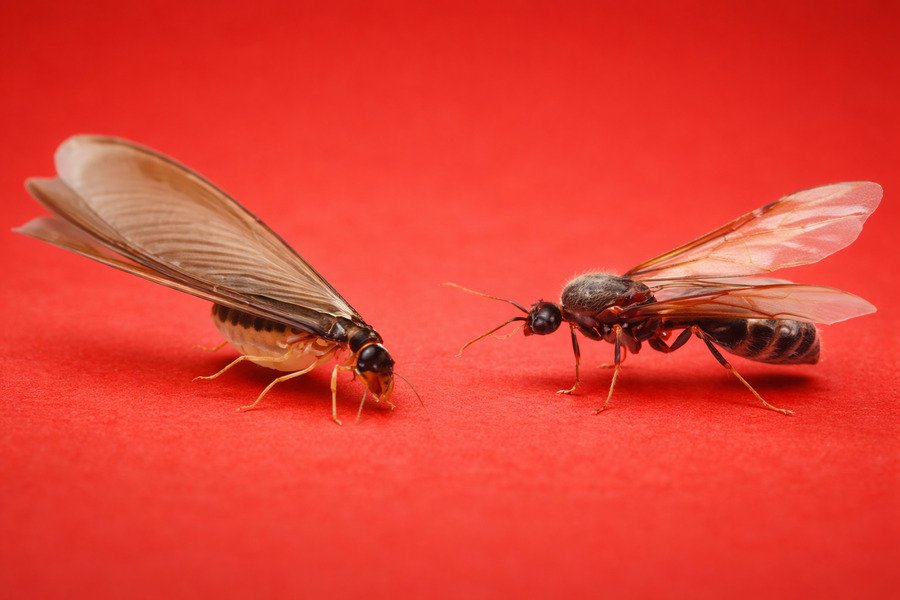
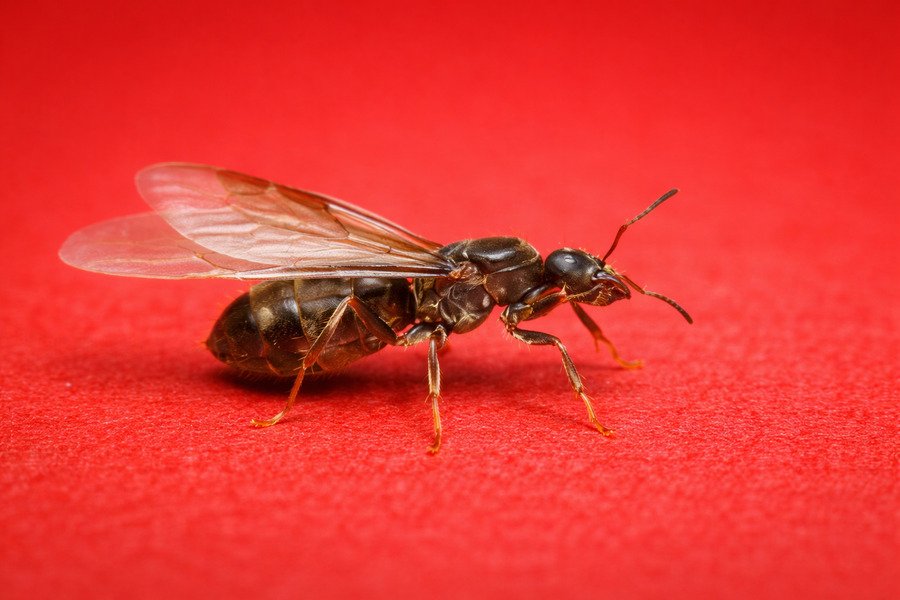
Flying ants, also known as alates, are essentially the reproductive members of an ant colony. Unlike termites, flying ants have a more segmented body structure, featuring a narrow waist that clearly separates the thorax from the abdomen. This constriction gives flying ants a more defined and angular appearance. Moreover, their antennae are elbowed, which is a significant characteristic that sets them apart from termites whose antennae are straight.
The wings of flying ants also differ from those of termites. Flying ants possess two pairs of wings, but unlike termites, the front pair is noticeably larger than the hind pair. When at rest, these wings are typically held in a V-shape over their back. Additionally, the wings of flying ants are more robust and less likely to fall off easily compared to termite wings. The wing veins in flying ants are also more pronounced and visible, adding another layer of distinction.
Another key feature of flying ants is their elbowed antennae, which are bent at a sharp angle. This feature is particularly useful in differentiating them from termites. Furthermore, flying ants often have darker, more varied coloration, ranging from black to dark brown, and sometimes even reddish hues. The combination of segmented bodies, elbowed antennae, and differently sized wings makes flying ants relatively easy to distinguish from termites when closely observed.
Behavioral Differences Between Termite vs Flying Ant
The behavioral patterns of termites and flying ants are markedly different, which can be another clue in identifying them. Termites are known for their secretive, wood-destroying habits. They are social insects that live in large colonies consisting of workers, soldiers, and reproductive members. Termites primarily feed on cellulose, which is found in wood, paper, and other plant materials. Their ability to chew through wood makes them particularly destructive to homes and buildings.
Termites are also known for their tendency to avoid light, preferring to remain hidden in dark, humid environments. They build intricate tunnel systems called mud tubes, which they use to travel between their nest and food sources. These tunnels help protect them from predators and environmental conditions. The presence of mud tubes is often a clear sign of a termite infestation.
On the other hand, flying ants exhibit different behaviors. They are typically seen during their nuptial flight, which is a mating event where winged males and females leave their nests to mate and establish new colonies. This flight usually occurs during warm, humid weather conditions and can involve large swarms of flying ants. After mating, the males die, and the fertilized females lose their wings and start new colonies.
Unlike termites, flying ants are not primarily wood-destroyers. While some ant species may cause structural damage by excavating wood to create their nests, they do not consume wood like termites. Instead, ants are more opportunistic feeders, consuming a wide variety of foods, including sweets, proteins, and fats. These behavioral differences are crucial in distinguishing between termite and ant infestations.
Habitat Preferences: Where to Find Termites and Flying Ants
Termites and flying ants have distinct habitat preferences, which can further aid in their identification. Termites thrive in environments that provide ample moisture and cellulose-rich materials. They are commonly found in decaying wood, soil, and damp areas within buildings. Subterranean termites, the most common type in many regions, build their nests in the soil and create mud tubes to access above-ground food sources. Drywood termites, on the other hand, infest dry wood and do not require contact with soil.
Termites are also attracted to areas with high humidity levels, such as basements, crawl spaces, and attics. Leaky pipes, poor drainage, and inadequate ventilation can create ideal conditions for termite infestations. In outdoor settings, termites can be found in dead trees, stumps, and wooden structures like fences and decks. Identifying these preferred habitats can help in locating and addressing termite problems.
Flying ants, in contrast, have different nesting habits. Most ant species build their nests in the ground, often in sunny, well-drained areas. Some ants, like carpenter ants, excavate wood to create their nests but do not consume the wood as termites do. Instead, they prefer to nest in dead or water-damaged wood. Flying ants are also known to establish colonies within walls, under floors, and in other sheltered locations.
During the nuptial flight, flying ants can be seen swarming around lights and other illuminated areas, as they are attracted to light sources. This behavior is a key indicator of flying ant activity. Understanding the habitat preferences of termites and flying ants is essential for effective pest management and prevention.
Life Cycle of Termites vs. Flying Ants
The life cycles of termites and flying ants share some similarities but also have significant differences. Termites undergo a complete metamorphosis, consisting of egg, nymph, and adult stages. The termite colony is divided into castes, each with specific roles. The queen and king are the reproductive members responsible for laying eggs and establishing new colonies. Worker termites are sterile and perform tasks such as foraging, nest maintenance, and caring for the young. Soldier termites have enlarged mandibles and protect the colony from threats.
Termite eggs hatch into nymphs, which resemble smaller versions of adults. Nymphs molt several times as they grow, eventually developing into their respective castes. The queen can live for many years, continuously producing eggs to ensure the colony’s growth and survival. This structured social system allows termites to efficiently exploit their environment and expand their colonies.
Flying ants, also known as alates, are the reproductive members of an ant colony. Their life cycle begins with the nuptial flight, during which winged males and females leave their nests to mate. After mating, the males die, and the fertilized females shed their wings and search for suitable nesting sites. Once a female establishes a new nest, she becomes the queen and starts laying eggs.
The eggs hatch into larvae, which are fed and cared for by worker ants. As the colony grows, the queen continues to produce eggs, and the workers take on various roles, such as foraging, nest maintenance, and caring for the young. Some ant species also have soldier ants with specialized roles in colony defense. The life cycle of flying ants is closely tied to their colony structure and reproductive strategies.
Importance of Identifying Termites and Flying Ants
Correctly identifying termites and flying ants is crucial for effective pest management and home protection. Termites can cause significant structural damage to buildings by consuming wood and other cellulose materials. Identifying termites early can help prevent extensive damage and costly repairs. Understanding the specific species of termites present can also guide targeted termite treatment strategies.
Flying ants, while less destructive than termites, can still pose problems if they establish colonies within buildings. Carpenter ants, for example, can weaken wooden structures by excavating galleries for their nests. Identifying flying ants and their nesting sites can help prevent infestations and minimize potential damage. Additionally, knowing the differences between termites and flying ants can prevent unnecessary panic and ensure appropriate treatment measures are taken.
Proper identification also allows for the implementation of preventive measures. For example, addressing moisture issues and removing decaying wood can reduce the risk of termite infestations. Sealing entry points and maintaining a clean environment can deter flying ants from entering buildings. Understanding the habits and preferences of these pests can inform proactive measures to protect homes and properties.
Common Myths About Termites and Flying Ants
There are several common myths and misconceptions about termites and flying ants that can lead to confusion and ineffective pest management. One prevalent myth is that termites and ants are the same insects. While they may appear similar, they belong to different insect orders and have distinct physical and behavioral characteristics. Understanding these differences is essential for accurate identification and treatment.
Another myth is that termites only infest old, decaying buildings. In reality, termites can infest any structure that provides a suitable environment, including new buildings. Moisture, wood-to-soil contact, and conducive conditions can attract termites regardless of the building’s age. Regular inspections and preventive measures are necessary to protect all types of structures from termite damage.
A common misconception about flying ants is that they are active throughout the year. In fact, flying ants are typically seen during their nuptial flight, which occurs seasonally. The appearance of swarms of flying ants can be alarming, but it is a natural part of their reproductive cycle. Understanding this behavior can help homeowners distinguish between temporary swarming events and ongoing infestations.
How to Control Termite and Flying Ant Infestations
Controlling termite and flying ant infestations requires a combination of preventive measures, regular inspections, and targeted treatments. For termite control, it is essential to address moisture issues and eliminate wood-to-soil contact. Ensuring proper drainage, fixing leaks, and maintaining ventilation can create an environment less conducive to termites. Regular inspections by a pest control professional can help detect early signs of termite activity and prevent extensive damage.
Treatment options for termites include liquid termiticides, baiting systems, and fumigation. Liquid termiticides create a barrier around the structure, preventing termites from entering. Baiting systems use poisoned bait to attract and eliminate termite colonies. Fumigation is typically reserved for severe infestations and involves sealing the structure and introducing a gas to eliminate termites. The choice of treatment depends on the severity of the infestation and the specific termite species involved.
For flying ants, prevention involves sealing entry points, maintaining a clean environment, and addressing moisture issues. Removing food sources and eliminating potential nesting sites can help deter ants from entering buildings. If an infestation is detected, baiting systems and insecticidal sprays can be effective in controlling ant populations. Professional pest control services can provide targeted treatments and ongoing monitoring to ensure long-term control.
Conclusion: Key Takeaways for Identifying Termites and Flying Ants
Identifying termites and flying ants accurately is essential for effective pest management and home protection. Key physical differences include termites’ straight antennae, broad waist, and equal-sized wings, compared to flying ants’ elbowed antennae, narrow waist, and differently sized wings. Behavioral differences, such as termites’ wood-destroying habits and flying ants’ nuptial flights, provide additional clues for identification.
Understanding the habitat preferences and life cycles of these pests can inform targeted prevention and treatment strategies. Common myths and misconceptions about termites and flying ants can lead to confusion, but accurate knowledge helps in making informed decisions. Preventive measures, regular inspections, and professional pest control services are crucial in managing and controlling infestations.
By recognizing the key differences between termites and flying ants, homeowners can take proactive steps to protect their properties from potential damage. Early detection and appropriate treatment can prevent extensive structural damage and ensure a safe and pest-free environment. Staying informed and vigilant is the best defense against these common household pests.